Reimaging Ruins
Year 03 | Semester 05 | 2018
The Vasai fort with its glorious past and interesting history today has become a ruin. The fort is free to enter, unfortunately not easy to navigate and thus there is no information about the monuments in the fort. It has layers of history to narrate to a visitor and also has a deeply woven story with the neighboring Kohli villages and other locals. Therefore this studio focused on the theme of the future of this past?
The easiest way out would be to have a clean slate, a tabula rasa, which would allow to re-build and expand without any restrictions. However, the aim was to design more sensitively. The question, in today’s time was how do we build in an existing past, a place where the old and the new exist together. The intent of the project is to unearth/examine the nature of relationship between the ‘old’ and the ‘new’. To create a place, that not only acknowledges and celebrates the past, but also paves the way for its future. Keeping in mind the various stakeholders, and the tangible and intangible elements of this site, this visitor’s center aims to serve as a space of congregation and information.
Process
Concept
The first phase of the studio included a Folly exercise. The siting and location of the folly, as well as the idea to conceptualize the installation was an outcome of the in depth site analysis. The learnings and conclusions from the site study influenced the siting of this place. Taking on different interpretations, the designs of today would be the history of tomorrow. The intent of the project is to revive the memory of the fort if not the fort itself, to revitalize, to rejuvenate the fort and its layers of its history.
01.
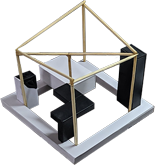
Through the use of various materials, this folly depicts the co-existing of various entities within one common boundary ie. the Fort walls. Each element having their own characteristics and individuality but are tied together by one common factor.
02.
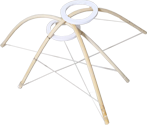
The arch here represent the support that the Fort provides to its stakeholders. Held together by delicate strings, it serves to elevate and uplift the people, providing support, and security.
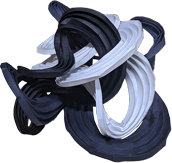
03.
These intertwined pathways portray the interlocking and overlapping journeys of inhabitants throughout the history.
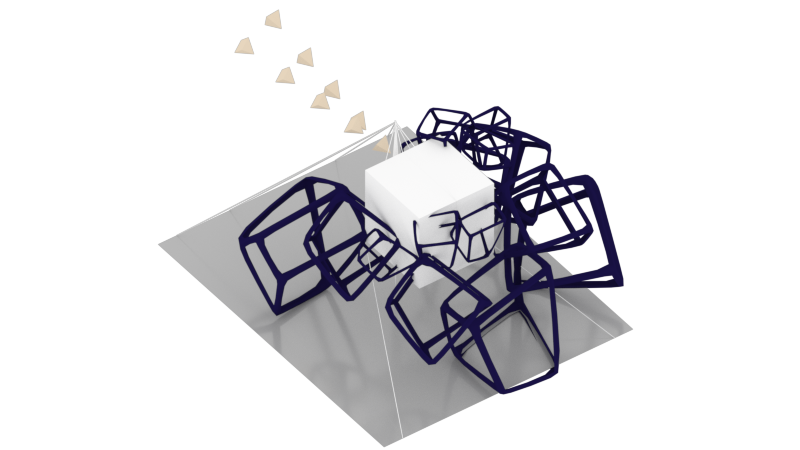
04.
This folly represents the delicate balance of the ecosystem in and around the fort.
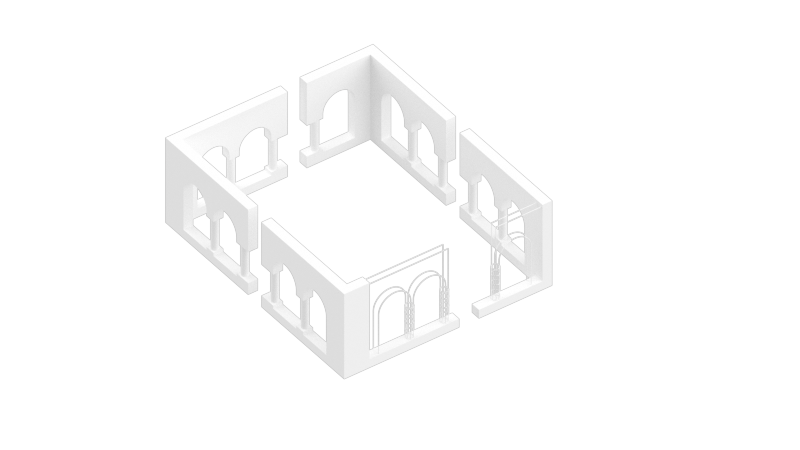
05.
Using minimal material in contrast to the existing heavy stones, this installation reimagines the completion of broken elements. It does not mean to rebuild the past in anyway but only to accentuate it and bring attention to what once existed.
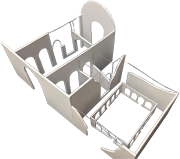
06.
At a larger scale, using existing clues of the form and shapes, missing parts of the structure were added. This way, one gets a more holistic idea of what used to be and is encouraged to appreciate its monumentality.
Design
Drawings
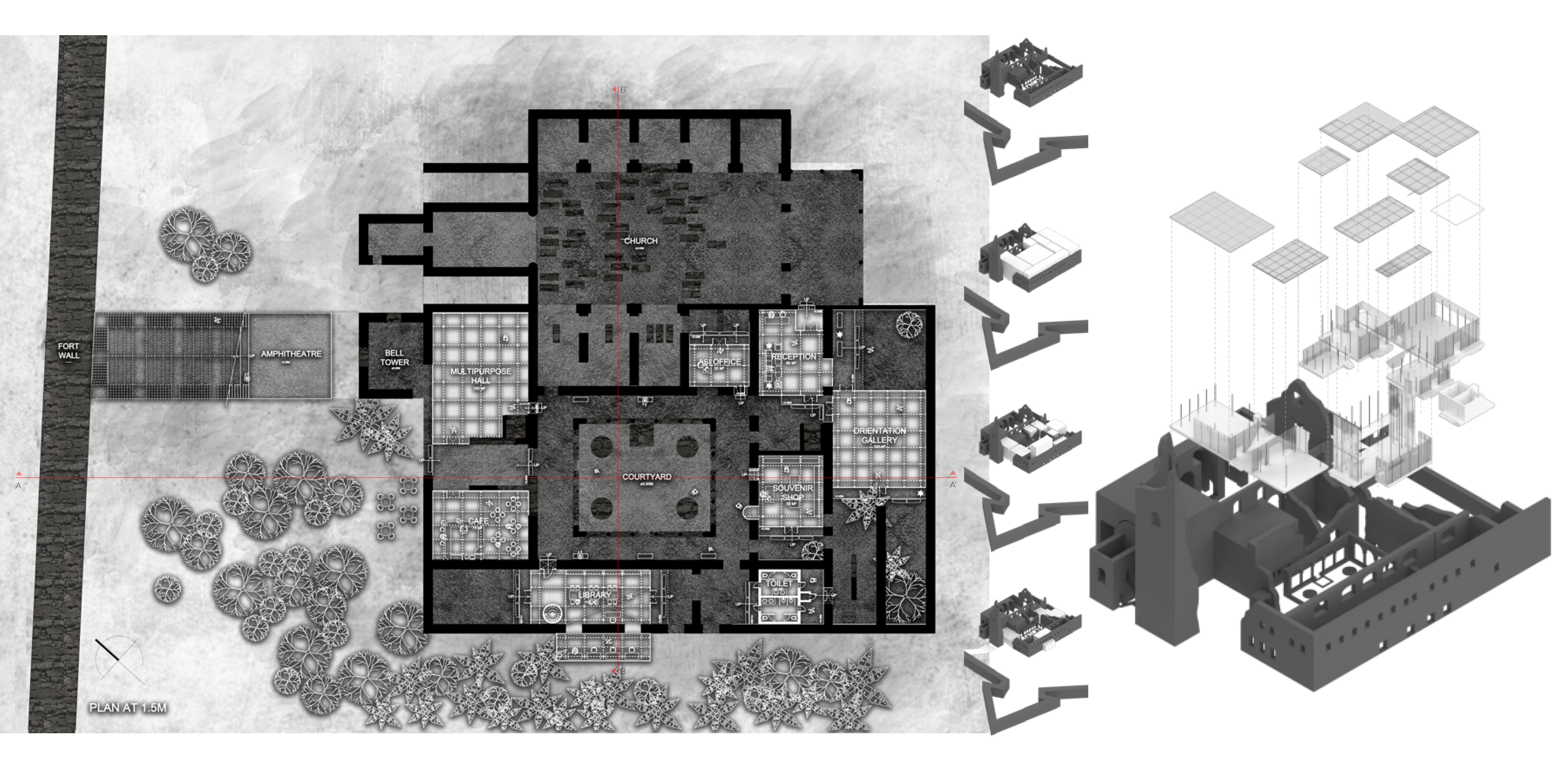
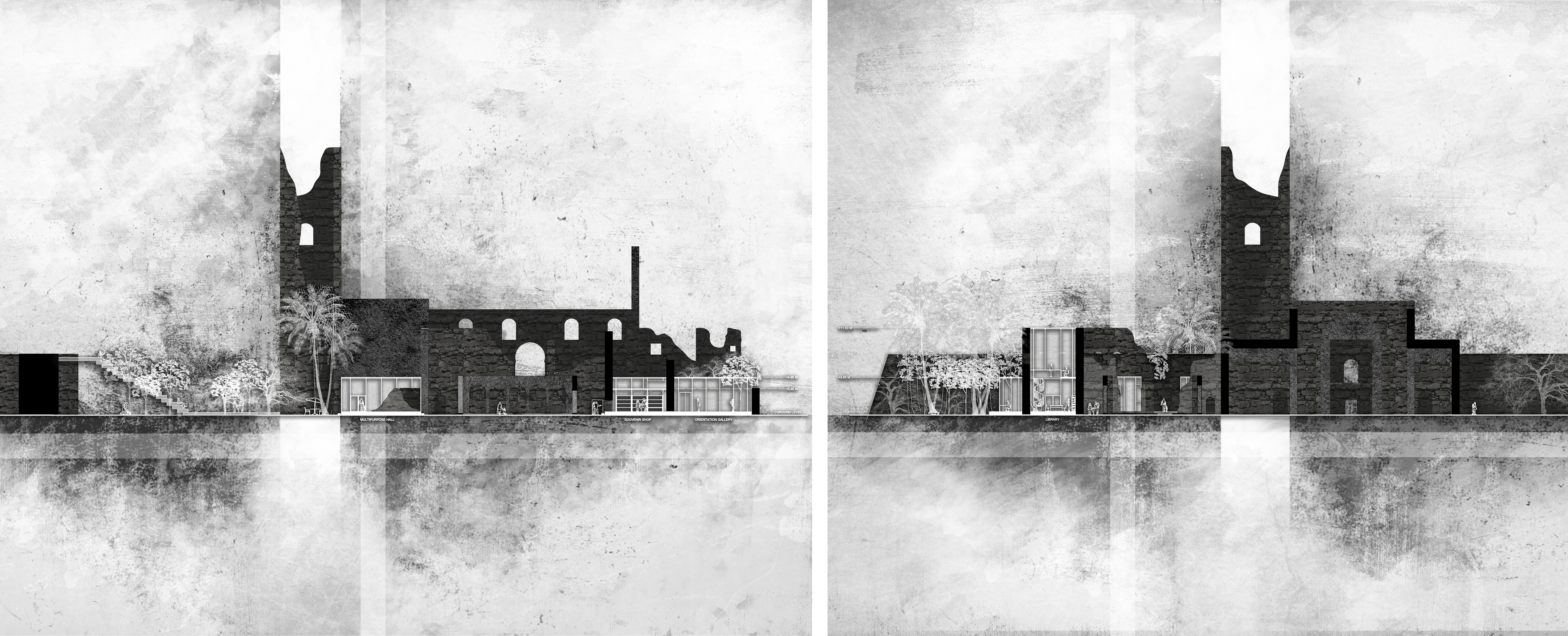
Reimagining the ruins does not necessarily mean reconstructing them. The idea of giving a holistic view and experience of a particular space is what this projects aims to achieve.
Keeping the historical as well as the cultural significance intact, the structure is interwoven within the ruins to curate a journey through it. The impermanence of the structure is highlighted by placing it against a background of the timeless ruins.